This place, Belgrade, was in earlier times the great bulwark and defense of the Kingdom of Hungary. For many years it stood as a barrier against the advance of the Ottoman forces into Central Europe. It was vainly besieged first by Amurath the Second, and later by Mahomet the Great. On both occasions, the city resisted bravely and did not fall.
During the second great siege, the defense of the city was led by the famous Hungarian commander John Hunyadi. He was supported by allied troops and by forces raised through the preaching of Friar John of Capistrano, whose words inspired many to take up arms. Hunyadi marched out from the city and encamped in the open field, where he drove back the Turkish army with great slaughterMarket Buildings and Their Design.
In this battle, Mahomet himself was wounded in the chest, lost much of his artillery, and saw two hundred of his ships destroyed by a fleet that arrived from Buda. This victory was widely celebrated throughout Christendom. However, in later years, when Belgrade was left poorly supplied and inadequately defended, it was finally taken by Suleiman the Magnificent. Since that time, it has remained under Ottoman control, and there appears to be little hope of its recovery.
Departure from Belgrade
After leaving Belgrade, we continued our journey through Servia, traveling inland from the great rivers. Along the way, we passed a very high hill, called Havilleck, lying on the southern, or right-hand side of our route. On this hill stand the ruins of an ancient monastery, now broken and deserted, yet still impressive in their position and silence. These remains speak of earlier Christian times, before the region fell under Ottoman rule Sightseeing Tour Ephesus.
Along the Danube to Hisargick
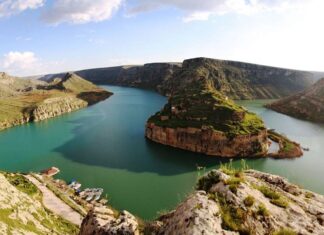
We then came to Hisargick, a place situated close to the Danube, although many maps place it farther away from the river than it truly is. Here, we finally took leave of that noble river, which by this point in its course has already traveled a vast distance.
From Ulm in Swabia, where the Danube first becomes navigable, it has flowed nearly nine hundred miles. From its original source in the mountains, it has traveled even farther. Yet still, it has a long way to go before it empties into the Euxine Sea, now known as the Black Sea. Few rivers in Europe can match it in length, power, or importance.
Roman Settlements and Decline
From Hisargick, we continued to Collar, not far from Smederevo, which was once an ancient Roman colony and settlement. In former times, this place must have held considerable importance, but it is now of little note, having lost much of its former strength and population.
Hassan Pasha Palanka and an Ancient Relic
Next we reached Hassan Pasha Palanka, located about forty English miles from Belgrade. It is thought to be named after Hassan Pasha, a famous Turkish general. While staying there, I noticed an ancient stone carving of great interest. It showed a lion attacking a wolf, finely cut and expressive in design.
This relic is a reminder that the land has passed through many hands—Roman, Christian, and Ottoman—and that traces of its former rulers still remain scattered throughout the countryside. Such objects offer silent testimony to the long and complex history of this region.