From Zemun, where Stephen the usurping king had once withdrawn and later died, we continued our journey by water toward Belgrade. Traveling by river offered a broad and impressive view of the land, and it allowed us to approach the city in the same way that merchants and armies had done for centuries. As we drew nearer, the size and strength of Belgrade became more and more evident Belgrade as the Bulwark of Hungary.
Names and Position of the City
Belgrade is known by many names. The Romans called it Singidunum, while others knew it as Taurunum, Alba Graeca, or Greek Weissenburg. The Hungarians call it Nándorfehérvár. Whatever the name, all agree that it is a large, strong, and populous city, and one of the most important trading centers in this part of Servia, also known as Upper Moesia.
The city is most impressively situated at the meeting point of two great rivers, the Sava and the Danube. The Sava lies to the west, while the Danube flows to the north. At this place, the Danube is very wide and runs with great force. It appears almost to overpower the Sava, much as the River Rhône seems to cut across the Saône at Lyon in France.
The Meeting of the Rivers
The waters of the two rivers are clearly different in appearance. The Danube looks whiter, more troubled, and full of motion, while the Sava is darker, greener, and clearer. At the very point where the rivers meet, there is an island, now thickly covered with trees. This island is not ancient; it is said to have formed only about thirty-five years ago, when the silt carried by the two rivers slowly settled and rose above the surface of the water Ephesus Tour Guide.
Castles and Fortifications
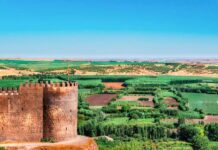
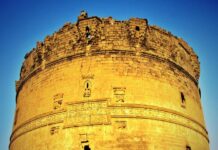
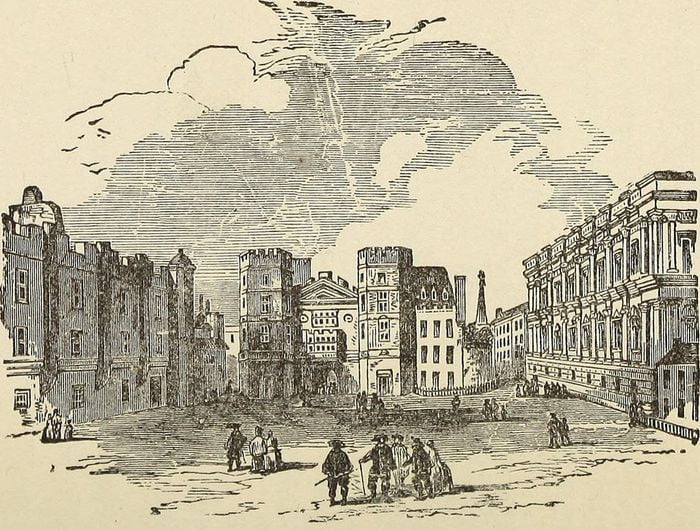
Upon arriving at Belgrade, I passed first by the water castle, and then by the upper castle, both of which are large and strongly built, with many towers. These fortifications show the military importance of the city, which has long stood as a gateway between Central Europe and the Balkans. From its walls, one can easily control movement along both rivers.
Streets and Covered Markets
The busiest streets of Belgrade, where most of the trade is carried on, are covered with wooden roofs, as in many other great trading cities. These coverings protect merchants and customers from the heat of the sun and from rain. The shops along these streets are usually small and simple. Many are no larger than a tailor’s bench set low to the ground.
The shopkeepers sit upon these benches and sell their goods directly to customers, who stand outside. Very few people enter the shops themselves. This manner of trading is efficient and well suited to the narrow streets and constant flow of people.
Markets and Trading Halls
I also saw two large stone buildings, built somewhat like an exchange, with two levels of pillars, one standing above the other. These structures were impressive in design, but they were so crowded with merchants’ goods that much of their beauty was hidden from view.
In addition to these, there are two great bezestens, or covered markets, where the most valuable and costly goods are sold. These places show clearly that Belgrade is not only a military stronghold, but also a vital center of commerce, drawing merchants from many lands and cultures.